
The conference concluded with a series of recommendations aimed at strengthening international efforts to advance justice, accountability, and the protection of the rights of Afghan women and girls. Participants called on governments, United Nations mechanisms, and international partners to take coordinated and sustained action in response to the ongoing human rights crisis in Afghanistan.
Recommendations to Member States
Member States were encouraged to:
• Maintain sustained attention to the human rights situation in Afghanistan.
• Support accountability initiatives addressing violations against women and girls.
• Ensure the meaningful inclusion of Afghan women in all discussions concerning Afghanistan’s future.
• Expand support for education, protection, and economic opportunities for Afghan women and girls.
Recommendations to United Nations Mechanisms
United Nations mechanisms were encouraged to:
• Accelerate the operationalization of the Independent International Investigative Mechanism for Afghanistan.
• Strengthen documentation and evidence-preservation efforts to support future accountability processes.
• Continue monitoring and reporting on the human rights situation of women and girls in Afghanistan.
• Promote and support the meaningful participation of Afghan women in international human rights processes.
Recommendations to International Partners and Donors
International partners and donors were encouraged to:
• Increase direct and sustained support for Afghan women-led organizations.
• Strengthen protection programmes for women human rights defenders and civil society actors.
• Support initiatives focused on documentation, advocacy, leadership, and capacity building.
• Invest in long-term programmes that promote women’s rights, participation, resilience, and inclusive development.
Conclusion
The conference reaffirmed that justice, accountability, and respect for human rights remain essential to addressing the challenges facing Afghan women and girls.
Speakers emphasized that sustainable peace, stability, and prosperity in Afghanistan cannot be achieved without the full, equal, and meaningful participation of women in all aspects of political, social, and public life.
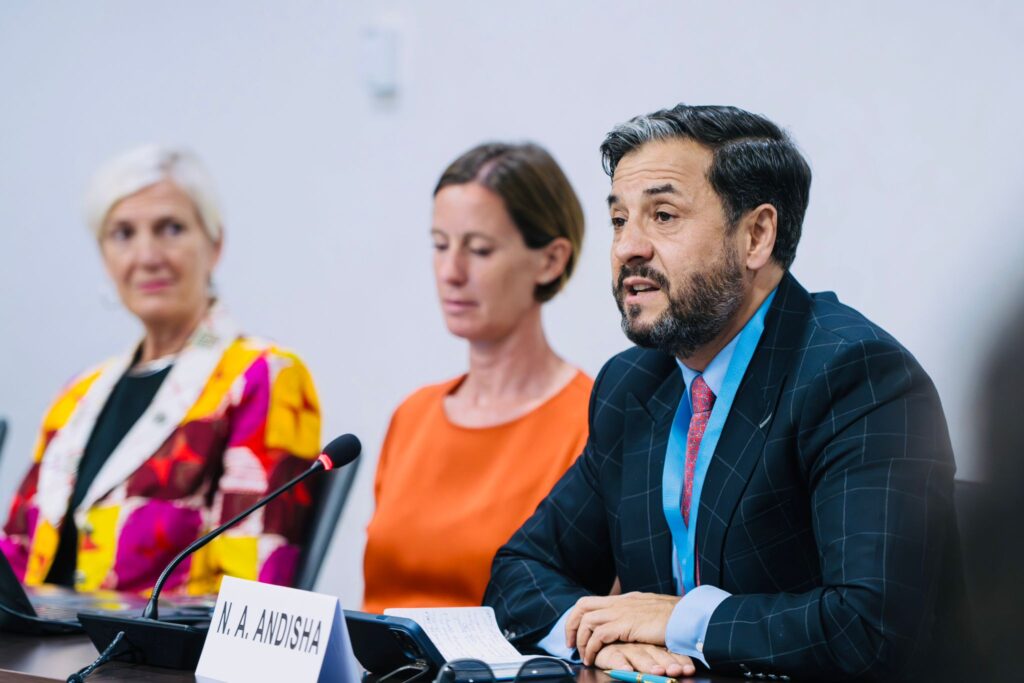
The conference concluded with closing remarks by Ambassador Nasir Ahmad Andisha, Permanent Representative of the Islamic Republic of Afghanistan to the United Nations Office at Geneva. Ambassador Andisha reaffirmed the importance of sustained international solidarity and continued support for Afghan women and girls. He emphasized that justice, accountability, and the meaningful participation of women are indispensable to building a peaceful, inclusive, and prosperous future for Afghanistan.
Shahmama extends its sincere appreciation to all co-sponsoring Member States, United Nations entities, partner organizations, speakers, moderators, panelists, and participants whose contributions strengthened collective efforts to advance justice, accountability, and the human rights of Afghan women and girls.
Shahmama remains committed to working with national and international partners to ensure that the voices, leadership, and rights of Afghan women continue to shape international engagement and future policy discussions on Afghanistan.